Return to MadridMan.com

March 2008 Archives

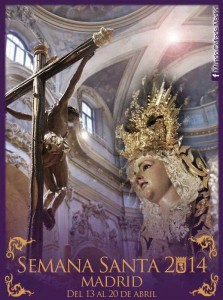
Semana Santa in Spain

| | Comments (1)
semana-santa-zafra.jpgSemana Santa, or Holy Week, is in near-full-throttle position here in Spain. While today's only Friday evening, one notices immediately fewer cars in the streets and the more traffic on Spain's highways. Madrid, on the other hand, will be comparatively tranquil with little traffic and lots of available parking spaces as seemingly half the population leaves town.

SOME PEOPLE like students, teachers, and some businesses, take the entire week off while many others only close only on "Jueves Santo" or Holy Thursday and through Easter weekend.

Other people will go to the family home in the "pueblo" for rest and relaxation while many others go down south to Sevilla, Granada, Córdoba, Cádiz, or the beaches of Málaga.

Still others will take advantage of the free time to fly to France or Germany or even to the United States where the exchange rate is VERY favorable for those carrying Euros.

VERY unfortunately, the weather forecasts for Holy Week in Spain are not very positive, expecting cloudy skies and some rainy conditions throughout Spain accompanied by cooler temperatures. None of this is surprising since Easter came SUPER early this year.

Many people will be enjoying the religious processions throughout Spain too, including in Madrid. I hope I'll have the opportunity to see some as I'm staying here this year although I'd love to get away for at least a few days. Oh well. I guess I can wait until the following week when I expect to spend 6 days in Granada. Hope the weather's good there. We'll see.

Links:
http://en.wikipedia.org/wiki/Holy_Week_procession
crespon-negro.gifIt really does seem like only yesterday. But in fact, 4 years have passed since the March 11, 2004 Train Bombings in Madrid by terrorists. It was a day when it seemed that time stopped altogether. Nothing else in the world existed.

In Columbus, Ohio, the night before the train bombings, I set my computer to record Madrid morning's radio news which I did every night. The next morning, upon awaking, I'd burn the saved MP3 file to a CD-RW and then take it to work and listen there.

But this particular morning was different - and would never be forgotten. I turned on my computer as usual, eating my cereal while going to the Spanish news websites. And that's when I saw it.

I'd recently been able to subscribe to TVEinternational through my cable service and so I turned on the TV immediately - at about 5am or 11am local Spain time. To my horror I saw the the horrible aftermath just 2 hours after the bombings took place. Atocha Train Station was chaos as were the streets surrounding it.

The Death Toll kept going up and up with every minute and my mind went immediately to friends I knew in Madrid whom took the trains through Atocha on their way to work. First thing I did was call off of work so I could better follow the situation and see if they were okay. Luckily, everyone one I knew was.

People from all over the world sent ME dozens of emails with hopes that my friends in Madrid were okay. I was doing the same, sending dozens of emails to people I knew there.

The next day I went to work and everyone there was asking about my friends in Madrid. While working, I followed the Spanish news online while also listening to the recording I'd made the night before the bombings. It was spooky. The recorded news program to which I was listening stopped what they were discussing and gave us the brief news, "An explosion of some kind has taken place at the Atocha Train Station," but nothing more was known until shortly thereafter. I still have that CD recording and listen to it from time to time.

atocha-train-station-candle-tribute-march-2004.jpgRoughly 10 days after the 11-M train bombings I flew to Madrid for my already scheduled Semana Santa vacation there. Some people at work thought I was crazy, as if I was flying into a war zone or something. My family was concerned too. I wasn't worried in the least. In fact, worry wasn't an emotion I felt since knowing my friends were okay. There was something which was drawing me to Madrid. I NEEDED to be there. I NEEDED to be with the people I cared about. I NEEDED to see all this for myself.

Madrid and Spain continues in a state of recovery. People never forget the event nor those whom were lost to this pointless terrorist attack on 11 March 2004. In general, Spanish people are VERY VERY resilient. They won't forget what happened but they're also not afraid to walk the streets or use the trains. For that I give them a lot of credit.

Links:
http://en.wikipedia.org/wiki/11_March_2004_Madrid_train_bombings
http://en.wikipedia.org/wiki/Aftermath_of_the_11_March_2004_Madrid_train_bombings
http://en.wikipedia.org/wiki/Casualties_of_the_11_March_2004_Madrid_bombings
http://en.wikipedia.org/wiki/Atocha_Train_Station_Memorial
jose-luis-zapatero-presidente-2008.jpgWith the elections nearly over and 95% of the votes already counted, both the conservative party Partido Popular ("PP") and the socialist party Partido Socialista Obrero Español ("PSOE") have acknowledged the victory of PSOE's José Luis Rodriquez Zapatero to be Spain's president for another 4-years. Mariano Rajoy, PP's party elect, has already called Zapatero congratulating him on his victory.

Today, Sunday 9 March 2008 was my FIRST Presidential election experience here in Spain. And what an experience it was. I cannot vote as I don't (yet) have citizenship but I went with some friends whom did vote first thing this morning.

First of all, I love the Spanish voting system whereas the elections ALWAYS take place on a Sunday so more people are available and free to vote. NOT like when elections take place on a weekday/workday and a real effort has to be made, ask for work time off to vote, etcetera. I also like the "rule" which says no party, no candidate, no media outlet can make new claims or additional campaigning on the Saturday before the elections as it's a day of reflection. I think this is due to a 1984 law - which I think is great.

Here, I watched BOTH of the 2 debates between Partido Popular's Mariano Rajoy and PSOE's José Luis Zapatero and found it very interesting. Luckily, finally, my Spanish comprehension has reached a point that I understood nearly everything said in the debates. And also, both candidates spoke very slowly, making it easier for me.

I was also impressed that there were no less than 10 PARTIES with candidates running for President of Spain. Isn't that incredible? Can anyone imagine an election in the United States with TEN PARTIES represented? That's just incredible. And they all get time on television. Ten Parties! Wow. And new parties are popping-up and others leaving every elections.

As is customary, as the voting started off, both parties claimed a pre-victory. But as the exit poll numbers rolled in things began to change as it seemed likely that PSOE would win the election. Both parties' headquarters are located in downtown Madrid and both had large groups of supporters outside their front doors and also where all the speeches were made - OUTSIDE.

As time drew to the end, all parties made their speeches congratulating PSOE's victory, EXCEPT for the Izquierda Unida ("United Left") party - the 3rd most popular party in Spain - which critisized the two-party election system, not giving equal time or equal opportunity to their party. This guy was really angry but took full responsibility for the outcome while promising to continue fighting for the rights of women, immigrants, and those whom can't fight for themselves.

"IU" will likely finish with 3% of the total votes while PSOE will get about 44% and PP will get about 40%. I'll update this figure when the final votes are counted.

People are passionate about the elections and with good reason. Spain is a country which LOVES to demonstrate. PSOE typically demonstrates in the Puerta del Sol while PP always demonstrates in the Plaza de Colón below the enormous Spanish flag. I won't try to describe both parties here because there are always those whom would read too much into my words and start labeling my claims. Suffice it to say that PP is the right-of-center nationalist conservative party and PSOE is the slightly-left-of-center liberal party.

The campaign certainly wasn't "clean". What campaign is? For everything one party claims the other party criticizes. For every benefit one party claims the other party claims as a disaster. I guess this is the way of politics and I don't like that.

My day began today with the elections. LOTS of people in the streets on this Sunday morning. Shortly after that I went to the Teatro Real - NOW TWICE IN ONE WEEK - this time for a classical music concert with great seats. After that, I had Cocido Madrileño with friends in their home. After that I had a nice, long, cleansing walk home - much needed after that wonderfully heavy lunch - and then started in with the elections details on television. Again I ask, "Am I Spanish YET!?" hehehe... I guess not - but I'm working on it!

So congratulations to José Luis Rodriquez Zapatero on his win to continue his presidency 4-years more. PP will have another shot at that time - and will no doubt make a good campaign for it.
As in most of the rest of "The Modern World", Spain recognizes working women in all the media outlets - including THIS one. Today is it, 8 March 2008.

http://www.internationalwomensday.com/
http://en.wikipedia.org/wiki/International_Women's_Day

Even I've noticed an obvious shift in sex of traditionally male positions. Most notably, to me, is the number of female doctors - at least in Madrid - in the hospitals and local doctors offices. The doctor I had when I first moved to Madrid 2 years ago was a man. Shortly after "joining", that man left and was replaced by a 50-something woman. We get along very well, as well as with the man before her.

But in waiting for my turn to see my doctor I can't help but notice that ALL the doctors at my doctor's office (called a "Centro de Salud" or "Ambulatorio") - except for one man - are women! One time I took a friend to a "Centro de Salud" in downtown Madrid after a non-life-threatening accident and he was attended by not one but two female doctors. I've even spent an unfortunate amount of time visiting people at hospitals here in Madrid and many of the doctors there are women too. And surprisingly, a high percentage of the nurses there are MEN! Wow! In many many pharmacies you'll also find female pharmacists. Very common.

In addition to the public health-care sector, I've noticed more and more public bus drivers are women! This, to me, is very very surprising. The high majority of drivers are still men but I hadn't seen a female bus driver in Madrid until about 9 months ago. Same goes with taxi drivers - which remains mostly male. I've seen maybe 4 women taxi drivers in Madrid in the last 2 years. This number may not change too much as driving a taxi is much more potentially dangerous than driving a bus what with the potential for robbery of a taxi driver, women being more of a potential target.

Also in the street cleaning sector. One might consider street cleaning to be WOMEN'S WORK. But until about 9 months ago I never saw a woman cleaning the streets with the broom and the cart. They were ALWAYS men. But not now.

Police: Wow. What  a shift. I've seen so many female police persons on the streets. The seeming majority of the women working as police persons are giving out parking tickets and working traffic maintenance but I've also seen a number of policewomen carrying pistols for hard-core law enforcement.

But while there are more and more women working, their wages still are not equal to those those of men - which is still the case all over the world. But I things are improving - albeit slowly. The thousands of responsibilities at home still mainly go to the woman - whether they're working outside of the house or not.

From the pages of Qué! newspaper (translated by yours truly):

"IQUALITY IS A LONG WAY OFF
Just 'To Lend a Hand' at home doesn't help anyone
In the last year women have occupied two of three new jobs created in Spain. The news would be satisfying if the salaries would be equal to those of men in the same jobs. But the worst thing is that this step forward in the working world hasn't meant the same thing for the domestic jobs in the home. There are people whom continue thinking it's sufficient "to lend a hand", but there's an abyss of sharing tasks at home."

It's important for women to have all the same opportunities as men. I just wish Spain would do away with their sexual and age discrimination. It's incredible to me to see job postings in newspapers offering XYZ JOB but they're ONLY considering women. For example, "Seeking woman, age 19-26 years old." Isn't this shocking??? There don't seem to be an age or sex discrimination laws on the Spanish books. Imagine a perfectly qualified male, 59 years old, applies for this same job and he's told that no, he won't be hired because A) he's NOT a woman and B) he's too old. WHY would they only consider hiring 21-29 year old WOMEN for that job? To me it's obvious. The company offering this job wants to pay a LOWER SALARY. And why? Because they think a woman's work is less valuable than the work of a man. And why the age restriction? Same reason. They think the value of a young person's work is lower than a mature person's work. Besides, right?, (tongue in cheek coming here....) a young woman doesn't have a family to support, right? Why should we, "The Company", pay her any more?? Shocking. Really shocking.

The Spanish working world really leaves a lot to be desired in MANY respects, not only the topic of the disastrously low salaries in general, but all to make the rich owners richer. That's what it's all about, right? Maximizing profits at the expense of everything else. These same rich owners are SO HAPPY for the influx of illegal immigrants willing to work for nearly nothing and with no benefits. This too makes the rich owners richer. Same with the working woman. If you can pay a woman, a young woman, or a young immigrant woman less - that means more money in THEIR (the owners) pockets. HUMPH! A hot topic for me. A VERY hot topic.

I support equality. Which is why the observance of today's day, "The International Working Women's Day", is so important. And in the vein of pure equality, I'm waiting for the invention of "The International Working Man's Day". Now THAT would be equality to the last point. But... we all know that's never going to happen. Is THAT equality??

A proverb in English goes, "What's good for the goose is good for the gander." Which means "What is good for a man is equally good for a woman; or, what a man can have or do, so can a woman have or do. This comes from an earlier proverb, "What's sauce for the goose is sauce for the gander."

international-womens-day.jpg
POSTER AT LEFT: Taken from Wikipedia's page on The International Women's Day.


The 1932 Soviet poster dedicated to the 8th of March holiday. The text reads: "8th of March is the day of the rebellion of the working women against the kitchen slavery" and "Down with the oppression and narrow-mindedness of the household work!". Originally in the USSR the holiday had a clear political character, emphasizing the role of the Soviet state in liberation of women from the second-class citizens' position...
el-teatro-real-madrid-inside.jpgLast night I had the honor of attending the Ballet Nacional de España: Elegía-Homenaje a A. Ruiz Soler, El Café de Chinitas. This was an homage or dedication to Antonio Ruiz Soler - a flamenco dancer, choreographer, and director born in Sevilla in 1921 and died in Madrid in 1996. He was more familiarly known as "Antonio el bailarín". So last night's ballet was ballet with a touch of flamenco.

First, the place... It took place in the famed Royal Theater or El Teatro Real in Madrid, between the Plaza Isabel II and the Plaza de Oriente.
(metro: OPERA) Wow. What a place. The place is grand. GRAND! And very nice. It was built in 1850 and closed in 1925 due to damages caused by the construction of the metro station, ÓPERA, just below the theater. It reopened in 1966 totally remodeled. It closed again in the mid-1990s for remodeling once again.

I've been inside twice or three times before, attending classical concerts but always sitting in the uppermost seats near the ceiling. The views are not the best from up there but thankfully they have big screen monitors, surprisingly, for these "cheap seats".

Last night's show was something special and my seat was on the ground floor, in the "Butaca de Platea" - definitely NOT the cheap seats last night. If you look in the photo above, I was seated on the lowest "covered" level at at the left. No screens were necessary here! What great views. What great sound. The orchestra was ethereal during the first half of the performance.

el-teatro-real-madrid-outside.jpgThe first half of the performance of this production, called "Elegía-Homenaje", of the Ballet Nacional de España was classical ballet but with just a touch of flamenco. The female ballet dancers wore solid color dresses. The men wore flamenco-style costumes. I must admit that I was just a tad bored in this first half but it was also somewhat entertaining.

At the 20-minute break, after just 35 minutes of performance, I got up to go have a glass of champagne at the bar which is the custom when attending the opera, ballet, or theater. Went upstairs a couple levels and turned left to what appeared to be the entrance to the bar. There were two uniform-wearing women standing at the door checking tickets - which I found odd. So I showed my ticket and she waved me through. What I thought was the entrance to the bar was actually a small room filled with VERY well-dressed people. All men were wearing suits and ties and the women in fashionable dresses - and then there was me, wearing my best jeans, shoes, and my best shirt, along with my shoulder back wrapped around my body. Yikes. I feel terrible UNDER dressed to be here. But fine. I'm here so I go to the back of the room where I find a small bar and two bartenders which are handing out glasses of champagne, errr... CAVA. With Cava in hand, I turn around to see a large, round table in the middle of the room. The table is covered with hundreds of little foods-on-melba-toasts, foods like tortilla de patata, cheeses, hams, paté, a tomato spread, a greenish spread, and a number of other things. I help myself the best I can with glass in one hand and food in another, trying not to break the melba toast all over my shirt - or the very spongy, expensive-looking carpet on the floor. Starting to leave for my seat before the beginning of the second half of the performance, I stop at the door to ask the woman there if this room is for everyone carrying tickets. She said something like, "No. This is only for those whom carry these particular seats." I didn't really understand it but gathered it was only for those carrying the more expensive "covered", side/private seats. Oooookay! And here I just happened upon this room by chance! I know that in the public bar area - for common folk (ha!) - they charge 3 Euros per glass of champ...err... CAVA.

Back to the seat for the second half, called "El Café de Chinitas". And WOW, what a second half. It lasted 1 hour and 25 minutes. This was true FLAMENCO DANCING - and also Sevillanas - but being ballet it had obvious ballet movements in the flamenco dance. Very very entertaining from beginning to end. The women were dressed in more flamenco-style dresses and the men also in flamenco or bull fighter-style costumes. The music, this time, was mainly performed by flamenco groups on chairs but a few numbers were performed by a rock or jazz band behind the curtain. On the full-size screen just behind the performance, separating the dancers from the band, was constant slow-motion video of images "inspired by" Salvador Dalí. And many of the songs sung were poems by Federico Garcia Lorca. There was a reoccurring character of Salvador Dalí as a child throughout the ballet performance. A few of the songs sung and performances actually gave me chills - which is always a good thing.

One very entertaining and funny set - which did not give me chills - featured a paunch man dressed in drag as a female flamenco dancer, complete with full plumage, makeup, wig, stockings, female flamenco shoes, and large fan. He had very manly movements, very comical at times, and very very entertaining. I wondered whether this was art or comedy - or a fusion of both, I presumed.

The end of the show, as with most works of theater, dance, or opera, included about 10 minutes of applause as the many groups were invited to the front of the stage for their share of the applause, then everyone, then the main characters, then the bands, then the main characters again, then the choreographer, then the director, then the entire group again, and on and on. Wow. My hands hurt by the end. But it did come to an end at about 10:20pm and I walked out the backside doors facing the Plaza Oriente and nicely illuminated Palacio Real.

What a nice evening. Hope I'm fortunate enough to visit the Teatro Real once again. I understand getting tickets to the OPERA in Madrid is nearly impossible, being sold out for months in advance by season ticket holders.

palacio-real-madrid-plaza-de-oriente.JPG

About this Archive

This page is an archive of entries from March 2008 listed from newest to oldest.

February 2008 is the previous archive.

April 2008 is the next archive.

Find recent content on the main index or look in the archives to find all content.

Powered by Movable Type 4.0
Destinations Blogs - BlogCatalog Blog Directory
Blogdup Blog Directory Travel blogs
Add to Technorati Favorites
Blogarama expat